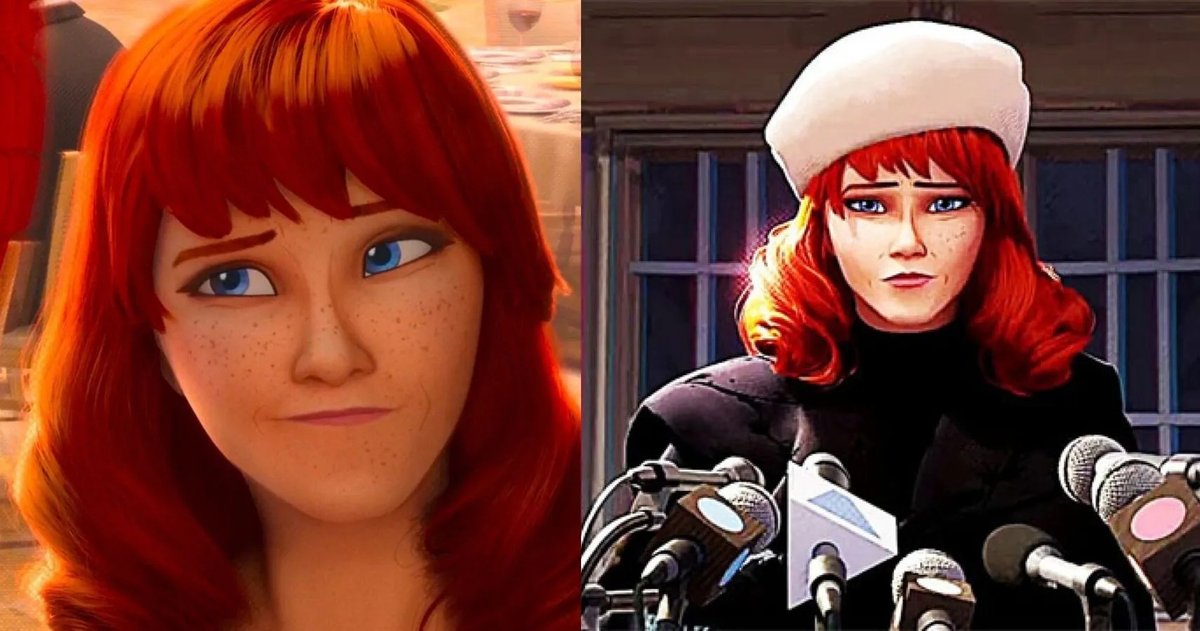
"Face it, Tiger... you just hit the jackpot!" With those seven iconic words, Mary Jane Watson burst onto the scene, not just into Peter Parker's life, but into the very heart of the Spider-Man mythos. For decades, her vibrant personality, unwavering spirit, and complex relationship with the web-slinger have defined a significant part of what makes Spider-Man so relatable and human. Exploring The Legacy of Mary Jane Watson Across Spider-Man Adaptations reveals a character far more profound than just a love interest, a figure who has constantly pushed Peter Parker to confront his responsibilities, challenged his dual identity, and ultimately, carved out her own indelible mark on popular culture.
At a Glance: MJ's Enduring Impact
- Iconic Introduction: Mary Jane's famous first line in The Amazing Spider-Man #42 (1966) instantly cemented her as a character with unforgettable charisma.
- Evolving Persona: From a fun-loving party girl, she matured into a deeply empathetic, supportive, and fiercely independent woman, often serving as Peter Parker's emotional anchor.
- Central Love Interest & Wife: She became Peter Parker's primary romantic partner and, for many years, his wife, navigating the unique challenges of being married to Spider-Man.
- Controversial Comic Moments: Her marriage and its later controversial erasure in "One More Day" highlight her central, often dramatic, role in Peter's life.
- Beyond the Comics: MJ has been a foundational character in film, animation, and video games, with each adaptation offering a fresh perspective on her essential qualities.
- A Hero in Her Own Right: Increasingly, MJ has demonstrated her own heroism, intellect, and agency, even recently adopting a superhero identity, "Jackpot."
More Than a Pretty Face: MJ's Genesis and Iconic Debut
Before she even officially revealed her face, Mary Jane Watson was a running gag in The Amazing Spider-Man #15 in August 1964. Aunt May was constantly trying to set Peter up with her, and Peter, ever the awkward teenager, kept avoiding the mysterious redhead. This prolonged tease built immense anticipation, a testament to creators Stan Lee and Steve Ditko's storytelling prowess.
When she finally did arrive, fully revealed in The Amazing Spider-Man #42 (November 1966), it was with a bang. Designed by the legendary John Romita Sr., Mary Jane was a stark contrast to Peter's more traditional girlfriend, Gwen Stacy. Gwen was the studious, sweet, "girl next door"; MJ was a vivacious, free-spirited, fun-loving extrovert who loved to dance and live life to the fullest. Her introduction, "Face it, Tiger... you just hit the jackpot!", wasn't just a line; it was a mission statement, perfectly encapsulating her confident, playful, and utterly magnetic personality. From that moment on, "Tiger" became her recognizable nickname for Peter Parker, a term of endearment that has echoed through the decades.
Initially, Stan Lee and John Romita Sr. actually envisioned Gwen Stacy as Peter's true love. However, Mary Jane's unexpected popularity, vibrant personality, and undeniable chemistry with Peter led to a shift in creative direction. Readers simply loved MJ, and her energetic character often pulled Peter out of his bouts of self-pity and angst. Writer Gerry Conway further solidified her as a compelling and complex character in 1972, laying the groundwork for her eventual ascension to Peter's primary love interest. This shift wasn't just a plot point; it reflected a growing understanding that Peter needed someone who could truly balance his often-grim existence with joy and light.
The Heart of Spider-Man: MJ's Evolution and Core Relationship
Mary Jane's initial carefree facade belied a deeper, more complicated character. After Gwen Stacy's tragic death, MJ shed some of her party-girl image, revealing a more caring, empathetic, and mature woman. She became a crucial emotional support for Peter, one of the very few individuals to discover his secret identity, and one of even fewer to truly understand the weight of it. This shared secret formed an unbreakable bond, moving their relationship beyond mere flirtation into genuine intimacy and mutual respect.
The journey to marriage for Peter and MJ was not without its bumps. Initially desiring freedom and wary of commitment, Mary Jane famously refused Peter's marriage proposals twice. She cherished her independence and was acutely aware of the dangers and demands of Peter's dual life. However, her love for Peter, and her growing understanding of his burdens, eventually led her to accept, and their marriage in The Amazing Spider-Man Annual #21 (1987) was a landmark event. It was a bold step for Marvel, signifying a mature new chapter for one of its most iconic heroes, a decision also mirrored in the newspaper strip.
Married life, predictably, was far from ordinary for Mrs. Parker. Mary Jane experienced her own career setbacks, including being stalked by a deranged fan, Jonathan Caesar. She battled personal struggles like smoking and the constant stress of Peter's disappearances and near-death experiences. The true depth of her character shone through in these moments, demonstrating her resilience and steadfast support for Peter, even when it exacted a heavy toll on her own well-being.
One of the most intense periods for their marriage came during the 1994–96 "Clone Saga." Mary Jane became pregnant, an event that pushed Peter to briefly quit being Spider-Man, seeking a normal life for his burgeoning family. The stress was immense, and at one point, Mary Jane was nearly killed by Peter himself, who was under hypnotic suggestion. Tragically, after moving to Portland in search of peace, and then returning to New York, Mary Jane was poisoned by a Green Goblin agent, resulting in a devastating stillborn baby. This profound loss, combined with other escalating threats, ultimately compelled Peter back into his role as Spider-Man, realizing he couldn't escape his destiny, and MJ, for all her pain, understood.
A Controversial Twist: "One More Day" and Its Aftermath
The marital problems didn't end with the "Clone Saga." Peter's secret return to being Spider-Man continued to strain their bond. Mary Jane endured another harrowing experience when she was kidnapped by a telepathic stalker, the trauma of which led to their temporary separation. She moved to Los Angeles to pursue acting, a reflection of her ongoing desire to build a life independent of Spider-Man's shadow, though they later reconciled in Denver.
The most profound and controversial turning point for Peter and MJ's relationship came in the 2006–2007 storyline, "Civil War," and its direct follow-up, "One More Day." During "Civil War," the Parkers lived in Stark Tower, but when Peter publicly unmasked as Spider-Man, he later moved MJ and Aunt May out for their safety. This decision backfired catastrophically when an assassin, hired by Kingpin to target Peter, shot Aunt May instead.
Faced with Aunt May's impending death and no medical solution, Peter made a desperate pact with the demon Mephisto in "One More Day." Orchestrated by then Editor-in-Chief Joe Quesada, the storyline aimed to "de-age" the characters, restore Peter's secret identity, and create new dramatic possibilities for the title. The cost was Peter and MJ's marriage. Mephisto's timeline manipulation erased their marital history from existence, making them "dated seriously for years" in the new timeline, but never married. Unbeknownst to them, Mephisto's interference also tied into a larger prophecy: a future red-headed Spider-Woman (their daughter) is destined to end his reign over Earth. This decision remains one of the most polarizing in comic book history, deeply upsetting many long-time fans who cherished their marriage. Even the newspaper strip, which had paralleled their marriage, eventually reverted the erasure as a "bad dream."
Post-"One More Day," Mary Jane's life took a different trajectory. She pursued an acting career on the West Coast, even briefly dating a celebrity named Bobby Carr. It was later revealed in "One Moment in Time" (2010) that Mary Jane made a secret pact with Mephisto herself. To ensure he would leave Peter alone, she convinced Peter to accept the deal, acknowledging her love but admitting she wasn't strong enough to endure his dual life anymore, encouraging him to move on. Despite the pain, she eventually opened a nightclub, and even gained temporary spider-powers during the "Spider-Island" event.
MJ Beyond Peter: Forging Her Own Path
The legacy of Mary Jane Watson isn't solely defined by her relationship with Peter. She has consistently sought to establish her own identity and career, even as the shadow of Spider-Man loomed large.
Her path to independence continued when Peter's mind was swapped with Doctor Otto Octavius. Octavius, as the "Superior Spider-Man," developed genuine feelings for Mary Jane but eventually broke up with her, vowing to protect her from his dangerous life. This period allowed Mary Jane to fully focus on building her own life, pouring her energy into her nightclub business. She later opened a new nightclub named "Jackpot" in Chicago, a nod to her iconic first line, and briefly worked for Tony Stark. She even donned his Iron Spider armor to help Peter and Tony fight the villain Regent, showcasing her courage and capabilities.
Despite the "One More Day" reset, the connection between Peter and MJ proved unbreakable. They reconnected and sought a "fresh start," navigating the complexities of their past and Peter's ongoing superheroics. Mary Jane continued to balance her thriving career—including a movie offer in Hollywood—with the constant disruptions of being close to Spider-Man. This led to her discovering Mysterio's disguise as her movie producer, and her subsequent placement under witness protection.
During the emotionally charged "Last Remains" storyline, Mary Jane was instrumental in confronting Kindred (a twisted Harry Osborn) and learning of Mysterio's memory tampering, which had affected so many. She played a key role in the confrontation that ultimately freed the Kindred spirits from Mephisto's influence, further solidifying the prophecy of her and Peter's future daughter, a red-headed Spider-Woman, defeating Mephisto.
The Multiverse of MJs: Adapting the Icon
Mary Jane Watson's enduring appeal lies not just in her comic book history but also in her vibrant presence across various adaptations. Each interpretation brings a different facet of her personality to the forefront, cementing her status as one of Marvel's most notable non-powered female characters.
Perhaps the most recognized live-action portrayal for many is Kirsten Dunst's portrayal in Sam Raimi's Spider-Man trilogy. Dunst brought a nuanced performance to the role, depicting MJ as a young woman struggling with her own ambitions while constantly being drawn into Peter's world. Her version wrestled with Peter's dual identity, often feeling neglected or endangered, yet she always returned to support him, becoming a symbol of the emotional cost of being Spider-Man. This cinematic MJ captured the character's capacity for both vulnerability and strength, making her relatable to a global audience.
While a brief, uncredited cameo by Shailene Woodley in 2014's The Amazing Spider-Man 2 was cut, it points to the character's perceived necessity in any comprehensive Spider-Man narrative. In animation, Zoë Kravitz voiced a different take on MJ in the critically acclaimed 2018 animated film, Spider-Man: Into the Spider-Verse. This version, while having less screen time, presented a more mature, independent MJ who had moved on from Peter B. Parker after their divorce, yet still harbored affection for him, providing a poignant reflection on the enduring nature of their bond, even when separated.
These adaptations, whether fully realized or glimpsed, underscore Mary Jane's critical role as Peter Parker's emotional touchstone. They explore the inherent drama of loving a superhero, the sacrifices involved, and the unwavering strength required to stand by someone who constantly puts their life on the line. Her legacy in adaptations is about more than just being "the girlfriend"; it's about being the human heart of the story, reflecting the everyday struggles and emotional toll that Peter's extraordinary life demands.
The "What Ifs" and Future: Enduring Through Change
Mary Jane Watson's journey continues to evolve, even in the most recent comic storylines, demonstrating her remarkable resilience and the creators' ongoing commitment to exploring her depth.
In the "Spider-Man Beyond" era, Mary Jane stood by a comatose Peter, even fighting villains alongside Felicia Hardy (Black Cat). When confronted by the villainous Queen Goblin, MJ demonstrated immense courage. She offered Peter a stable life, proposing they move in together, only for Peter to be tragically abducted by the mystical antagonist, Benjamin Rabin.
Six months later, Peter found a shocking new reality: Mary Jane was dating a man named Paul and had two children, Romey and Owen. This development was later revealed to be the result of a harrowing alternate future created by Rabin. In that timeline, Peter and MJ were sent to a dimension where MJ spent four years with Paul, forming a family with the adopted children after sacrificing herself to send Peter back to Earth. Ms. Marvel tragically died protecting Mary Jane from Rabin in that alternate reality, and upon Rabin's defeat, the magical construct children vanished, leaving MJ with the lingering emotional scars of a life that wasn't truly hers.
Coping with immense grief and depression from this experience, Mary Jane, with encouragement from Felicia Hardy, adopted her own superhero identity: "Jackpot." Using special tech, she embraced the idea that "with great power there must also come great responsibility," a line usually reserved for Peter. As Jackpot, she confronted a sin-infected Peter, protected him from the Queen Goblin, and aided in his recovery, proving her heroism wasn't just in supporting Spider-Man, but in becoming a force for good herself. She has continued to work alongside Spider-Man during the "Gang War" and "Venom War" storylines, further cementing her active role in the Marvel Universe.
During the "Venom War," a vision of a possible future showed Peter as the King in Black and Mary Jane as his queen, with a daughter named May, but ending tragically. Adding another layer of complexity, Mary Jane has developed powers from her experience with the Arachinote symbiote, a secret she keeps from Peter. Her current relationship with Paul and Dylan Brock continues to face challenges, with Paul questioning her superhero activities and Dylan, who has a complex history with Venom, often criticizing Paul's intelligence. MJ remains a character in flux, constantly balancing her past, her present, and a future that promises both love and peril.
Common Questions About Mary Jane Watson
The enduring nature of Mary Jane Watson's character means new and old fans alike often have questions about her multifaceted history.
Was MJ always Peter Parker's main love interest?
No, not initially. When Mary Jane was first introduced, Gwen Stacy was Peter Parker's primary love interest. Stan Lee and John Romita Sr. actually intended for Gwen to be Peter's true love. However, Mary Jane's immediate popularity and vibrant personality led creators to shift Peter's romantic focus to her, and she gradually became his central love interest, eventually marrying him.
Why did Marvel erase Peter and MJ's marriage?
Marvel erased Peter and Mary Jane's marriage in the controversial 2007 "One More Day" storyline. Editor-in-Chief Joe Quesada orchestrated this decision to "de-age" the characters, restore Peter's secret identity (which had been publicly revealed during "Civil War"), and introduce new dramatic possibilities for the series. The rationale was that Peter being married and having a known identity limited storytelling options, making him feel "old." The decision remains highly contentious among fans.
Does Mary Jane have powers?
Mary Jane Watson is generally considered one of Marvel's most notable non-powered female characters. However, she has had brief periods where she gained temporary abilities, such as temporary spider-powers during the "Spider-Island" event. More recently, after her traumatic experience with Benjamin Rabin, she adopted a tech-based superhero identity as "Jackpot," giving her powers through specialized equipment. She has also secretly developed powers from her experience with the Arachinote symbiote, which she currently keeps hidden from Peter.
Is Mary Jane Spider-Woman?
Mary Jane herself is not the Spider-Woman, though she has adopted a superhero identity as "Jackpot." The comics have, however, introduced a prophecy that a red-headed Spider-Woman—her and Peter's future daughter—is destined to defeat the demon Mephisto, indicating a potential future lineage of Spider-heroes.
The Unbreakable Thread: Why MJ's Legacy Endures
From her flamboyant debut to her current heroic identity as Jackpot, Mary Jane Watson's legacy is one of constant evolution, resilience, and profound influence. She arrived as a breath of fresh air, challenging the traditional archetypes of superhero love interests, and quickly proved to be so much more than a "pretty face." She is the human anchor to Peter Parker's extraordinary life, reflecting the joy, the sacrifice, the heart, and the sheer humanity that defines Spider-Man.
Her journey is a testament to the idea that strength doesn't always come from superpowers. It comes from empathy, from unwavering support, from fighting for your own identity, and from facing unimaginable heartbreak with grace. Mary Jane has shown that even when entangled in a web of superheroics, a person can forge their own path, find their own power, and profoundly shape the world around them. Her story is a pillar of the Spider-Man mythos, reminding us that even the most incredible heroes need someone to help them face it, Tiger, when they've hit the jackpot.