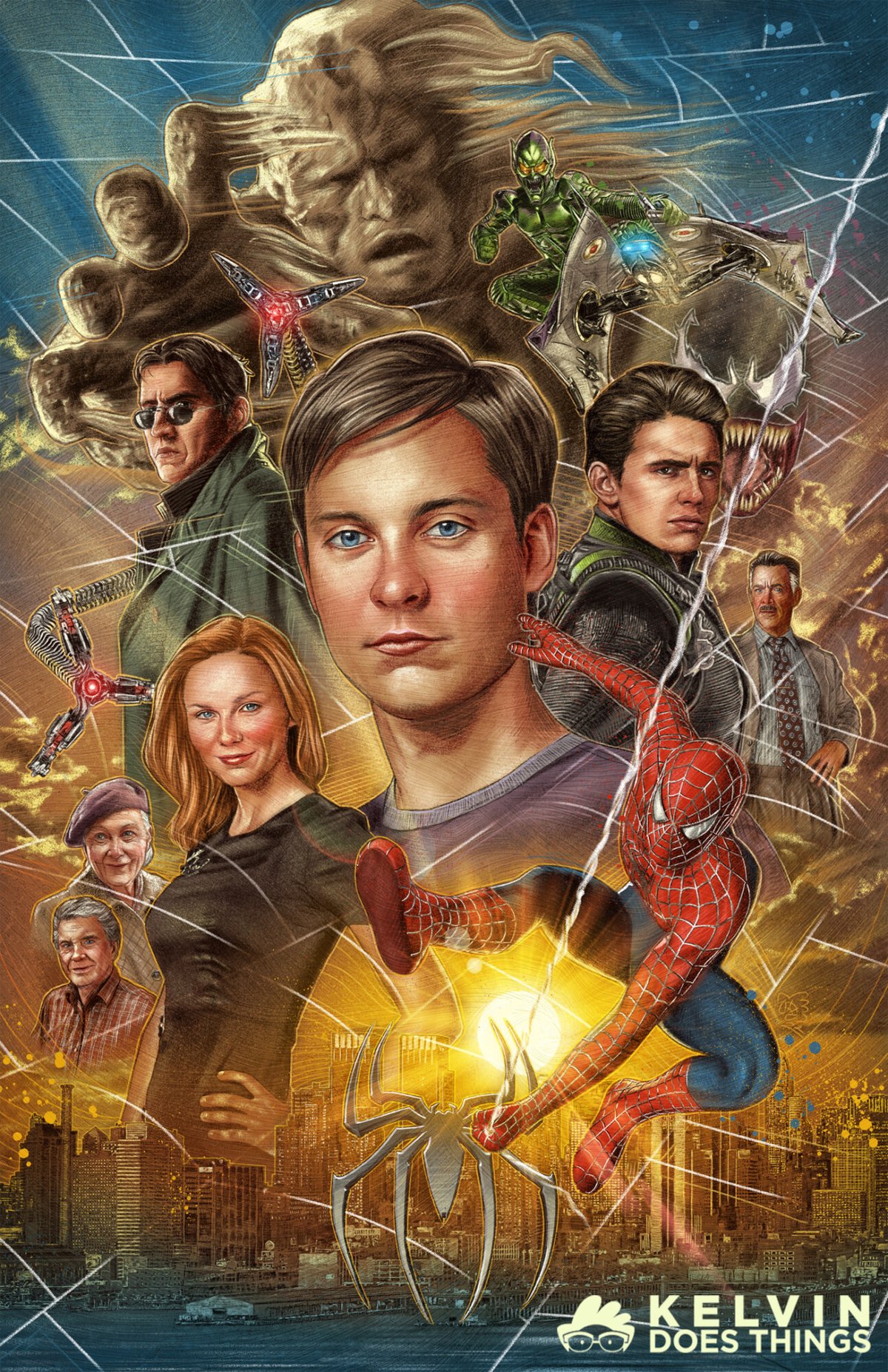
Twenty years ago, a modest-budgeted film about a friendly neighborhood web-slinger didn't just break box office records; it fundamentally reshaped the superhero genre, setting a new benchmark for character-driven storytelling and global impact. Sam Raimi's Spider-Man trilogy, especially its groundbreaking first installment, arrived at a pivotal moment, offering a much-needed earnest hero in a world still reeling from 9/11. This retrospective explores the intricate web of influence spun by Sam Raimi's Spider-Man Trilogy: Retrospective & Impact, tracing its origins, celebrating its triumphs, dissecting its missteps, and acknowledging its indelible mark on cinematic history, including the sprawling Marvel Cinematic Universe.
At a Glance: Why Raimi's Spider-Man Trilogy Still Swings High
- Genre-Defining: Kicked off the modern superhero movie era, proving their mainstream appeal and profitability.
- Cultural Anchor: Provided a genuine healing experience for New Yorkers post-9/11, celebrating the city's spirit.
- Human First: Prioritized Peter Parker's relatable struggles and humanity over spectacle, making him an everyman hero.
- Iconic Casting: Delivered definitive portrayals from Tobey Maguire (Peter Parker), Willem Dafoe (Green Goblin), and J.K. Simmons (J. Jonah Jameson).
- "Great Responsibility": Cemented the core moral lesson as integral to the hero's journey.
- MCU Blueprint: Laid essential groundwork for the style, tone, and character focus seen in subsequent superhero sagas.
- Lasting Legacy: Its impact was recently reaffirmed with key cast members reprising their roles in Spider-Man: No Way Home and Sam Raimi returning to direct in the MCU.
The Superhero Landscape Before the Web-Slinger Took Flight
Imagine a time when superhero movies weren't the dominant force in Hollywood. It might seem alien now, but before 2002, studios largely viewed comic book adaptations as risky, niche endeavors. For every Superman (1978) or Batman (1989) that found success, there were numerous misfires or cult classics that failed to ignite the mainstream. The genre lacked a consistent formula, often struggling to balance comic book fidelity with broad audience appeal. Executives were hesitant to sink massive budgets into what they perceived as "nerd culture" products.
Then came September 11, 2001. In the aftermath of the tragic attacks, America, and indeed the world, was searching for solace, hope, and an unambiguous hero. The collective psyche yearned for stories of courage, resilience, and good triumphing over evil, especially those deeply rooted in the very city that had suffered so much. The stage was inadvertently set for a hero who embodied those very ideals, a symbol of hope born from New York's grit.
Spider-Man (2002): Weaving a New Narrative for the Ages
When Spider-Man swung into theaters in May 2002, it wasn't just a movie; it was a phenomenon. It wasn't just a box office success; it was a cultural touchstone. It didn't just introduce a beloved character; it redefined an entire genre.
A Human Hero Above All Else
Sam Raimi, known for his distinctive blend of horror and heartfelt storytelling, brought a unique vision to the table. His primary focus wasn't on the spectacle of powers, but on the deeply human struggles of Peter Parker. Raimi dedicated significant screen time to Peter's life as a high school outcast: his unrequited crush on Mary Jane Watson, his friendship with Harry Osborn, and his constant battle with self-doubt and financial woes. This decision to ground the hero in relatable, everyday experiences made Peter incredibly empathetic. He was a "nice guy" in the truest sense, earning affection through respect and genuine decency, not through aggression or forced charm.
The narrative's emotional core hinges on the seminal lesson: "With great power comes great responsibility." Peter's initial selfish use of his newfound abilities—allowing a thief to escape—directly leads to the murder of his Uncle Ben. This profound consequence transforms Peter's understanding of heroism, imbuing his subsequent actions with a deep sense of guilt, duty, and sacrifice. It’s a foundational hero's journey, meticulously crafted to resonate universally.
Casting Gold: Performances That Defined a Generation
A significant part of the trilogy's success lies in its uncanny casting, which provided definitive interpretations of iconic characters.
Tobey Maguire's Peter Parker/Spider-Man was an earnest, awkward, and perpetually burdened soul. His performance captured the essence of the underdog, the kid who was trying his best but constantly faced overwhelming odds, both in costume and out. Maguire conveyed a quiet dignity and a profound sense of duty that influenced many later superhero actors seeking to portray the internal struggles of their powered personas.
The portrayal of villains also reached new heights. Willem Dafoe's Norman Osborn/Green Goblin was a revelation, a masterclass in blending monstrous evil with tragic vulnerability. Osborn, the brilliant but increasingly unstable CEO of Oscorp, transforms into the Green Goblin after self-experimenting with a performance-enhancing formula. Dafoe imbued the character with a chilling duality, showcasing a sympathetic, fallen patriarch who neglects his son Harry, yet also attempts to corrupt Peter, seeing a kindred spirit in his intellect and power. His performance was simultaneously terrifying, campy, and profoundly tragic, setting a high bar for future superhero antagonists.
Then there's J.K. Simmons as J. Jonah Jameson, a performance so iconic and pitch-perfect that it’s almost impossible to imagine anyone else in the role. Simmons masterfully balanced comedic relief with an underlying, albeit begrudging, decency. His blustery, cigar-chomping editor provided much-needed levity while remaining a formidable, albeit misguided, antagonist to Spider-Man.
And we can't forget Kirsten Dunst as Mary Jane Watson. Dunst brought a down-to-earth quality to the "girl next door" archetype, portraying Mary Jane as a dreamer with her own struggles, often overshadowed by Peter's secret life. While her character's agency would become a point of contention in later films, her initial portrayal offered a crucial emotional anchor for Peter's journey.
Embracing the Comic Book Soul
Raimi's Spider-Man unapologetically embraced its comic book roots. It didn't shy away from the vibrant aesthetic or the inherent melodrama. The film presented a direct translation of Stan Lee and Steve Ditko's original style, featuring witty banter, earnest romance, and kinetic action sequences that blended nascent CGI with practical effects. Spider-Man's red and blue costume was nearly accurate to the comics, a stark contrast to some of the darker, more "realistic" designs seen in other adaptations of the era. This commitment to the source material, while taking some creative liberties (like Spider-Man's organic webbing, a point of debate among purists), largely endeared it to long-time fans and newcomers alike.
A Box Office & Cultural Juggernaut
The film's impact was immediate and staggering. It was a massive critical and commercial success, shattering box office records and becoming the first film to gross over $100 million on its opening weekend. This achievement single-handedly proved that "nerd culture" could be mainstream and incredibly profitable, forever changing Hollywood's perception of superhero properties.
Beyond the numbers, Spider-Man served as a genuine healing experience for New Yorkers. Its celebration of the city's roots, its portrayal of ordinary citizens uniting to help Spider-Man, and its central theme of heroism emerging from tragedy resonated deeply in a post-9/11 world. The earnest, unambiguous hero was exactly what the public yearned for, a symbol of hope that proudly swung through the familiar skyline of a city learning to rebuild.
Spider-Man 2 (2004): The Gold Standard of Superhero Cinema
Just two years later, Sam Raimi returned with Spider-Man 2, a sequel that many critics and fans consider not just the greatest superhero film ever made, but one of the finest cinematic achievements of the 21st century. It took everything that worked in the first film and elevated it to an art form.
Spider-Man 2 delved even deeper into the personal sacrifices required of Peter Parker. We see him struggling to balance his life as a hero with his civilian responsibilities: losing his job, failing in college, damaging his relationships with Mary Jane and Harry, and even temporarily losing his powers due to his overwhelming emotional burden. This internal conflict, the core of Peter Parker's character, was explored with an honesty and pathos rarely seen in blockbuster cinema.
The film's villain, Dr. Otto Octavius, who becomes Doctor Octopus, was another triumph of character development. Portrayed brilliantly by Alfred Molina, Doc Ock was a sympathetic, tragic figure. A brilliant scientist whose ambition and a lab accident turn him into a menace, his struggle with his mechanical arms' sentience mirrored Peter's own battle with his powers. Raimi ensured that even the villain had a compelling, human backstory, making their conflicts emotionally resonant rather than merely physical.
The action sequences were more ambitious and seamlessly integrated, showcasing improved CGI while still retaining Raimi's signature kinetic style. Yet, these spectacles never overshadowed the heart of the story. Spider-Man 2 proved that superhero movies could achieve profound emotional depth while delivering exhilarating entertainment, solidifying the idea that the genre was capable of high art.
Spider-Man 3 (2007): The Weight of Too Many Threads
The trilogy culminated with Spider-Man 3 in 2007, a film that, despite its massive box office success, met with a more divided critical and fan reception. The ambition was undeniable, but the execution was often seen as overstuffed.
Raimi was tasked with integrating multiple villains into the narrative, a mandate often attributed to studio pressure. The film juggled Sandman (another sympathetic, albeit tragic, antagonist), the New Goblin (Harry Osborn's vengeful turn), and the fan-favorite Venom. While each character had potential, their combined presence diluted the focus, leading to a narrative that felt disjointed and rushed in places. Peter's own character arc suffered, particularly during the much-maligned "emo Peter" phase, where the Venom symbiote's influence manifested in an uncharacteristic and often comedic arrogance. Mary Jane's role, unfortunately, regressed further into a recurring "damsel-in-distress" trope, undermining the independent spirit she sometimes showed in the earlier films.
Despite these narrative challenges, Spider-Man 3 still delivered emotionally potent moments, particularly in Peter and Harry's tragic friendship and the redemptive arc of Sandman. It still shattered box office records, proving the enduring popularity of the character and the world Raimi had built. However, its perceived flaws prevented it from reaching the heights of its predecessor, leading to the unfortunate end of Raimi's tenure with the character.
Legacy and Longevity: What Still Swings, What Sags
Looking back two decades later, the Sam Raimi's Spider-Man Trilogy: Retrospective & Impact reveals both timeless brilliance and areas where the passage of time has shown some wear.
The Enduring Heart of the Trilogy
At its core, the trilogy's lasting power lies in its unwavering commitment to Peter Parker's humanity. Raimi understood that Spider-Man was compelling not because of his powers, but because of the ordinary, often clumsy, boy underneath the mask. The relentless pursuit of the "Great Power, Great Responsibility" lesson as the driving force behind every decision Peter makes ensures the story remains relevant and emotionally resonant.
The iconic performances, particularly from Maguire, Dafoe, and Simmons, remain definitive benchmarks. They transcended mere comic book adaptations to create characters that felt deeply real and profoundly memorable. The trilogy's emotional depth, its willingness to explore themes of sacrifice, regret, and the constant struggle between personal desire and public duty, continues to set it apart. It’s a series that genuinely made you feel for its characters, heroes and villains alike.
The Cobwebs of Time: What Hasn't Aged as Gracefully
While groundbreaking for its time, some elements of the 2002 Spider-Man film in particular show their age. The early CGI, especially in certain fight sequences, can appear inconsistent or dated by today's standards. There's also an "uncomfortably homophobic quip" in the first film that, viewed through a modern lens, stands out as an unnecessary and jarring moment.
Creative liberties taken by the film, such as Green Goblin's full-face mask (which many fans felt obscured Dafoe's expressive performance) and Spider-Man's organic webbing (a deviation from the comic's mechanical web-shooters), were points of contention upon release and remain so. Additionally, while Kirsten Dunst's Mary Jane had her moments, her frequent relegation to a "damsel-in-distress" role, particularly in Spider-Man 3, is a common criticism that highlights missed opportunities for character development.
Despite these minor quibbles, the overall narrative strength and character integrity of the first two films, and many moments within the third, ensure the trilogy's foundational place in superhero cinema.
The Raimi Effect: Paving the Way for the MCU and Beyond
It's impossible to discuss the modern superhero movie landscape without acknowledging the profound "Raimi Effect." Sam Raimi's Spider-Man trilogy didn't just have an impact; it laid the very groundwork for what would become the dominant cinematic genre of the 21st century.
A Blueprint for Origin Stories
The trilogy provided a successful blueprint for contemporary superhero origin stories. It established a style and tone that balanced humor, action, and genuine human drama. The focus on the character's journey before they fully embrace the costume, their relatable struggles, and the moral weight of their powers, became a template for countless films that followed, most notably within the Marvel Cinematic Universe itself. The MCU's ability to blend character-driven narratives with large-scale spectacle owes a significant debt to Raimi's pioneering work.
Tobey Maguire's Proto-Hero
Tobey Maguire's understated, earnest performance as Peter Parker created a new kind of superhero lead. He wasn't the brooding anti-hero or the hyper-masculine ideal; he was an ordinary young man burdened by extraordinary circumstances. This portrayal influenced subsequent actors who sought to bring depth and vulnerability to their masked crusaders, demonstrating that audiences connected more deeply with flawed, relatable heroes.
A Full-Circle Moment in the Multiverse
The enduring legacy of Raimi's trilogy came full circle in spectacular fashion in 2021-2022. The emotional resonance of the original films was powerfully underscored when Tobey Maguire and Willem Dafoe reprised their iconic roles in Spider-Man: No Way Home (2021). Seeing Maguire's Peter Parker, now older and wiser, mentor a younger Spider-Man resonated deeply with audiences, proving the timeless appeal of his portrayal and the continued power of Raimi's original vision. Dafoe's return as Green Goblin, still menacing and tragic, was equally impactful, cementing his place as one of the genre's all-time great villains.
Furthermore, Sam Raimi himself returned to direct Doctor Strange in the Multiverse of Madness (2022), bringing his distinctive horror-infused style to the MCU. This direct involvement by the original architect of modern superhero cinema was a powerful validation of his foundational contributions and an acknowledgment of the trilogy's lasting influence.
Untangling Common Questions About the Trilogy
Even two decades on, discussions about Raimi's Spider-Man trilogy continue. Here are answers to some common points of debate:
Was the organic webbing a betrayal of the comics?
For many purist fans, the decision to give Peter Parker organic web-shooters, rather than his classic mechanical ones, was a significant departure from comic book canon. From a storytelling perspective, Raimi reportedly preferred the organic approach because it leaned into the idea of Peter's powers being a fundamental part of him, an internal struggle rather than a technological one. It also removed the need for Peter to constantly invent and replenish his web fluid, streamlining the narrative. While it sparked considerable debate, it ultimately didn't detract from the film's overall critical and commercial success, becoming a unique hallmark of this particular Spider-Man incarnation.
Did Spider-Man 3 truly ruin the trilogy's reputation?
While Spider-Man 3 received mixed reviews and is generally considered the weakest link in the trilogy, it didn't "ruin" the trilogy's reputation entirely. The first two films are so highly regarded that they easily overshadow the third's flaws. Spider-Man 3 still grossed nearly $900 million worldwide, indicating strong audience turnout despite critical reception. Its narrative issues, often attributed to studio interference and an attempt to cram too many plotlines and villains into one film, have become a cautionary tale for superhero movie production. However, it's rarely remembered in isolation; rather, it's viewed as a stumble in an otherwise groundbreaking and beloved series.
How significant was its post-9/11 context?
The post-9/11 context was immensely significant, arguably elevating Spider-Man beyond a mere summer blockbuster into a genuine cultural healing experience. The film's setting in a post-9/11 New York, with its clear message of resilience, community, and an earnest hero embodying shared values, resonated deeply with audiences. The sight of everyday New Yorkers uniting to protect Spider-Man from the Green Goblin, shouting "Leave him alone!" as he lay injured, was a powerful moment that underscored the city's spirit and the yearning for collective heroism. The film offered comfort, hope, and a sense of pride in a city that had faced unimaginable trauma, celebrating its enduring strength through its most iconic fictional protector.
The Unbreakable Thread: Why Raimi's Spider-Man Still Matters
The legacy of Sam Raimi's Spider-Man trilogy is an unbreakable thread woven into the fabric of modern cinema. It proved that superhero stories could be both massive commercial successes and deeply personal, character-driven narratives. It taught Hollywood that audiences craved genuine emotion, relatable struggles, and heroes who wrestled with the moral weight of their powers, not just flashy CGI spectacles.
More than any other film before it, Raimi's Spider-Man solidified the idea that the heart of a superhero tale lies not in the costume or the powers, but in the person beneath the mask. It's a timeless story of growth, sacrifice, and the everyday hero within us all, reminding us that with great power—or even just a little responsibility—we can truly make a difference. It’s why, two decades later, this trilogy doesn't just hold up; it continues to swing high, inspiring new generations and reminding us of the foundational magic that first truly brought superheroes to life on the big screen.